- Regular cleaning and conditioning are essential to prevent leather from drying out, cracking, fading, or developing permanent stains over time.
- Always use gentle tools and cleaners—microfiber cloths, mild soap, distilled water, and leather conditioner—to avoid damaging the leather’s surface.
- Vacuuming before wet cleaning helps remove dust and debris that can scratch leather if rubbed in during wiping.
- Spot-cleaning stains promptly and using the right method for each type (food, ink, oil, pet messes) greatly reduces the risk of permanent damage.
- Conditioning every 3–6 months restores natural oils, keeps leather soft and supple, and extends the life of the couch.
- Preventive habits—like avoiding direct sunlight, keeping the couch away from heat sources, and rotating cushions—play a major role in long-term appearance.
- Avoid common mistakes such as over-wetting leather, using harsh chemicals, skipping conditioning, or ignoring spills, as these can shorten the couch’s lifespan.
Leather couches are elegant, comfortable, and durable, but they do require proper care to maintain their appearance over time. Whether it’s a few stains from spills, accumulated dust, or the natural wear that comes with daily use, knowing how to clean a leather couch correctly can save you from costly repairs or replacements. In this guide, we’ll walk through the best ways to clean your leather couch and keep it looking fresh for years.
Why Regular Cleaning Matters

Many people assume that leather is low-maintenance, but neglecting routine care can lead to permanent damage. Learning how to clean a couch properly is especially important with leather, since it is natural and porous and can absorb oils, dirt, and moisture over time. Without proper cleaning, your couch may develop cracks, discoloration, and an overall worn appearance. Regular cleaning not only keeps your couch looking new but also prolongs its lifespan.
Some benefits of routine cleaning include:
- Preserving the leather’s natural texture and color
- Preventing cracks, peeling, or fading
- Reducing allergens like dust and pet dander
- Maintaining the overall value of your furniture
What You’ll Need Before You Start
Before you start cleaning, gather all necessary supplies to make the process efficient and safe for your leather couch. Here’s a simple checklist:
- Soft microfiber cloths or lint-free cloths
- Vacuum with soft brush attachment
- Mild soap or specialized leather cleaner
- Distilled water
- Leather conditioner
- Spray bottle (optional)
- Soft-bristle brush for stubborn stains
Avoid harsh cleaners, bleach, or anything with ammonia, as these can damage the leather surface.
How Often Should You Clean a Leather Couch?
The frequency of cleaning depends on usage, household conditions, and the type of leather. Here’s a general guideline:
- Light use: Dust and wipe down every 1–2 weeks
- Regular use: Clean once a month and condition every 6 months
- Heavy use or pets: Clean every 2 weeks and condition every 3–4 months
Consistent care prevents dirt from embedding into the leather, which can make cleaning more difficult over time.
Can You Vacuum a Leather Couch?
Yes, but it’s important to use the correct method. Vacuuming removes dust, crumbs, and debris that can scratch the leather surface if rubbed during cleaning. Here are tips for vacuuming your leather couch:
- Use a soft brush attachment
- Avoid the beater bar, which can scratch the leather
- Gently vacuum seams, crevices, and under cushions
Vacuuming before any wet cleaning ensures you don’t rub dirt into the leather.
What’s the Best Way to Clean Leather Without Damaging It?
The safest approach is to use a mild soap and water mixture or a dedicated leather cleaner. Here’s a step-by-step method:
Step 1: Test a small area first
Before you start cleaning the entire couch, always test your chosen cleaning solution on a hidden or inconspicuous spot, such as the underside of a cushion or the back corner of the couch. This allows you to check for any negative reactions, like discoloration, darkening, or texture changes. Testing first ensures that your cleaning method is safe for your specific type of leather, as different finishes can react differently. Wait a few minutes after testing to see the results clearly.
Step 2: Dust and vacuum the couch
Leather can trap dust, crumbs, pet hair, and other debris in seams and crevices. Before applying any liquid cleaner, remove this surface dirt to prevent it from rubbing into the leather and causing scratches. Use a soft brush attachment on your vacuum to gently go over cushions, armrests, and corners. For hard-to-reach areas, a soft-bristled brush or a microfiber duster can help lift out dirt without damaging the leather.
Step 3: Prepare the cleaning solution
For most leather couches, a gentle cleaning solution works best. Mix a few drops of mild liquid soap (like baby shampoo or dish soap without harsh chemicals) with a cup of distilled water. Using distilled water prevents mineral deposits or streaking. You can pour this mixture into a bowl for dipping your cloth or into a spray bottle for light, controlled application. Avoid over-concentrating the soap, as too much can leave residue on the leather.
Step 4: Wipe gently with a damp cloth
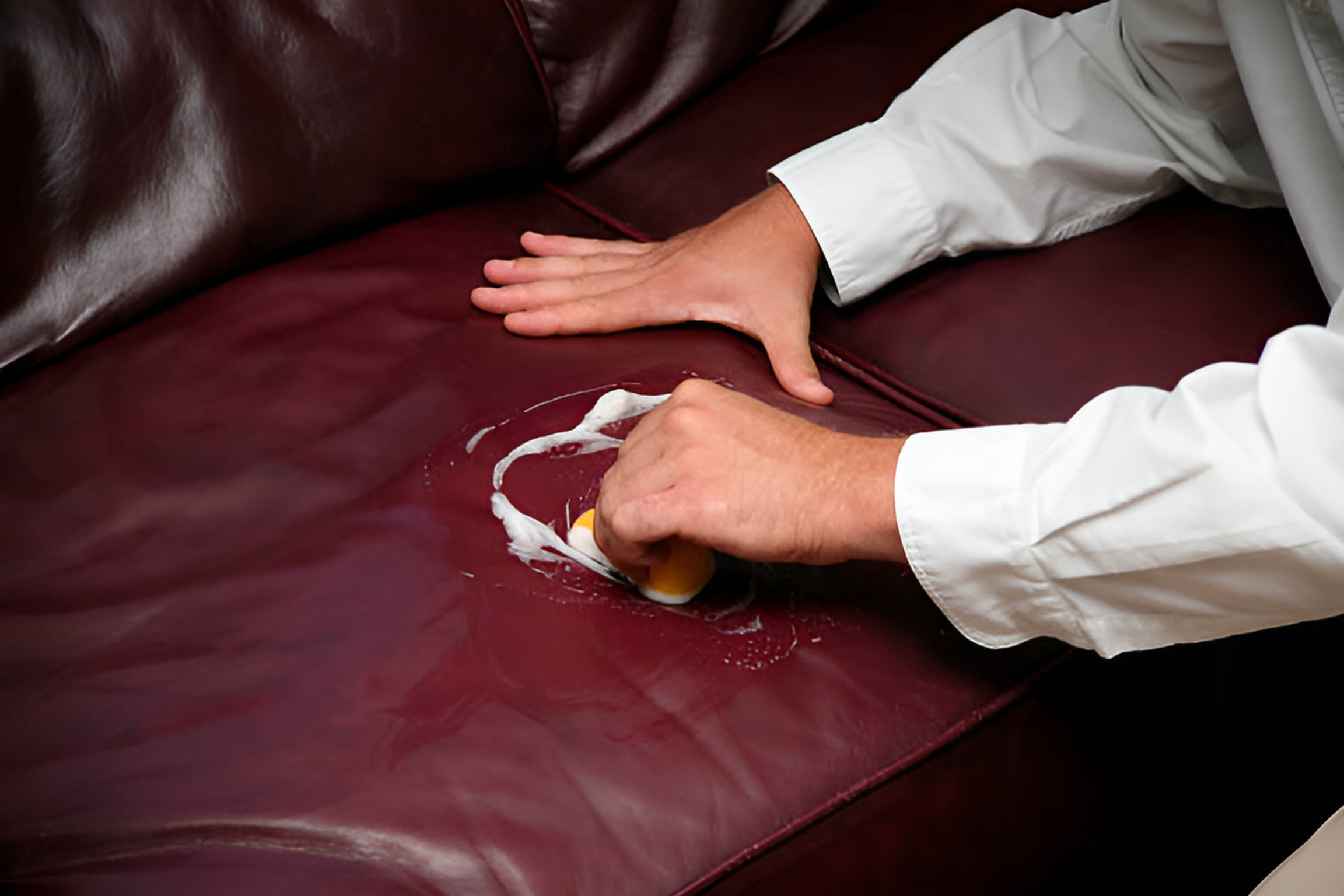
Dip a clean microfiber cloth into the solution and wring out as much water as possible—leather should never be saturated. Wipe the leather surface in gentle, circular motions, working on small sections at a time. Focus on areas that appear dirty or sticky, but avoid scrubbing aggressively, which can damage the finish. For stubborn spots, repeat the process lightly rather than using more force. Make sure the cloth is damp, not dripping wet, to prevent moisture from seeping into seams or cracks.
Step 5: Dry immediately
After wiping each section, use a separate clean, dry microfiber cloth to blot away any remaining moisture. Drying promptly prevents water stains, streaks, or mold growth, especially on untreated or natural leather. Once the entire couch is clean and dry, allow it to air out in a well-ventilated room, avoiding direct sunlight or heat sources that could cause the leather to crack.
How to Remove Common Leather Couch Stains
Stains happen, but the right approach can prevent permanent damage. Here’s how to tackle some typical problems:
1. Food and Drink Spills
When a spill happens, act quickly to prevent it from soaking into the leather. Blot the area immediately with a clean, dry cloth—avoid rubbing, as this can spread the stain or push it deeper into the leather. For sticky or dried-on residues, lightly dampen a cloth with a mild soap solution (as described in the cleaning steps above) and gently wipe the area in circular motions. Finish by drying the spot with a clean, dry cloth to prevent water marks.
2. Ink Stains
Ink can be tricky, but you can minimize damage with careful treatment. Dab lightly with a cotton swab dipped in rubbing alcohol, focusing only on the inked area. Avoid over-saturating the leather, as alcohol can dry it out. Once the stain is removed, gently wipe the area with a damp cloth to remove any remaining alcohol and immediately apply a leather conditioner to restore moisture and prevent cracking.
3. Oil or Grease Stains
Oil and grease can leave noticeable marks on leather if not handled properly. Sprinkle a small amount of cornstarch or baking soda directly onto the stain and let it sit for several hours—or overnight if possible. The powder absorbs the oil. Afterward, brush off the powder carefully and wipe the area with a slightly damp cloth to remove any remaining residue. Finish by conditioning the leather to restore its natural oils.
4. Pet Stains and Odors
Pet accidents require prompt attention to avoid lasting damage or odors. Start by blotting up as much liquid as possible with a clean, absorbent cloth. For mild odor removal, mix equal parts water and white vinegar, lightly dampen a cloth with the solution, and gently wipe the affected area. Avoid over-wetting the leather. Dry immediately with a clean cloth and follow up with leather conditioner to keep the surface soft and supple.
How to Condition a Leather Couch
Cleaning removes dirt but also strips away some of the leather’s natural oils. Conditioning restores these oils, keeping the leather soft and supple. Here’s how to condition your leather couch:
- Apply a small amount of leather conditioner to a soft cloth.
- Rub in gentle circular motions, covering the entire surface.
- Let it absorb for several hours or overnight.
- Buff lightly with a dry cloth to restore shine.
Conditioning every 3–6 months ensures the leather doesn’t dry out or crack.
Can You Use Homemade Cleaners on Leather?
Yes, but caution is needed. Some DIY solutions are safe in moderation, while others can harm your couch. Safe homemade cleaners include:
- Mild soap and water – the most reliable option
- Vinegar and water – great for odors, used sparingly
- Olive oil or coconut oil – can help with minor scratches, but test first
Avoid harsh chemicals, bleach, or abrasive scrubbing pads.
How to Prevent Leather Damage
Prevention is always better than repair. Here are simple habits to protect your leather couch:
- Keep the couch out of direct sunlight to prevent fading.
- Avoid placing it near heat sources like radiators or vents.
- Rotate cushions regularly to prevent uneven wear.
- Use throws or covers if pets or children frequently use the couch.
- Immediately clean spills to prevent permanent stains.
How to Handle Aging Leather
Even with proper care, leather develops character over time. Minor scratches and patina can add charm, but deep cracks or stiff leather need attention.
Tips for maintaining aging leather:
- Use leather conditioners to restore flexibility.
- Light scratches can often be buffed out with a soft cloth or small amount of oil.
- For major damage, consider professional leather restoration.
Is Professional Cleaning Worth It?
For high-end or antique leather couches, professional cleaning can be a worthwhile investment. Professionals use specialized products and techniques that ensure deep cleaning without damaging the leather. Regular professional care once a year can complement your routine maintenance.
Quick Daily Habits to Keep Your Couch Looking New
Small daily actions prevent big problems:
- Wipe down with a dry microfiber cloth to remove dust.
- Keep food and drinks in a separate area.
- Teach pets to use blankets instead of the leather directly.
- Check for minor stains or scratches and address them promptly.
How to Store or Move a Leather Couch
If you need to store your leather couch, preparation is key:
- Clean and condition the leather first.
- Cover with a breathable cloth, not plastic, to avoid moisture buildup.
- Keep in a climate-controlled environment to prevent drying or mold.
- When moving, lift carefully and avoid dragging to prevent scratches.
Can Leather Couch Covers Help?
Yes. Using couch covers can protect your leather from spills, dirt, and sun exposure. Look for soft, breathable materials that won’t trap moisture. Covers are especially useful in homes with children or pets.
Common Mistakes to Avoid When Cleaning Leather
Many people unknowingly damage their couches while trying to clean them. Avoid these mistakes:
- Using harsh chemicals or abrasive brushes
- Over-wetting the leather
- Not conditioning after cleaning
- Ignoring spills or stains until they become permanent
- Placing the couch in direct sunlight or near heat sources
Avoiding these pitfalls will keep your leather couch in top condition.
Wrapping It Up
Knowing how to clean a leather couch and keep it looking new for years is all about consistent care, gentle cleaning, and preventive maintenance. With the right supplies, simple techniques, and a few good habits, you can enjoy a soft, beautiful leather couch for decades. Regular cleaning, proper conditioning, and prompt attention to spills and stains ensure your investment remains comfortable, stylish, and long-lasting. By following these tips, your leather couch will continue to be the centerpiece of your living space for years to come.