Some of the most expensive home repairs start out completely invisible. A small drip behind a wall, a hairline roof crack, or a slow-failing compressor can quietly grow into a five-figure problem while everything looks fine on the surface. Understanding where these hidden issues hide, and catching them early, is one of the smartest things a homeowner can do to protect both their budget and their property value.
This guide walks through the most common silent threats lurking in and around your home, and what to watch for before they turn into emergencies.
The Roof Damage You Cannot See From the Ground
Roofs rarely fail all at once. Instead, small issues like cracked flashing, granule loss, or a slightly lifted shingle allow moisture to seep in slowly, rotting the decking underneath long before a leak ever appears on your ceiling. By the time a stain shows up indoors, the damage has often been spreading for months or even years, and repair costs climb accordingly.
Scheduling a periodic inspection with a local roofing service is one of the easiest ways to catch these problems while they are still minor and inexpensive to fix. Professional roofers use tools and training to spot subtle warning signs that most homeowners would never notice from a ladder or binoculars.
- Curling or cracked shingles that let water seep underneath
- Dark streaks or moss patches that trap moisture against the roof surface
- Soft spots in the decking felt when walking the roof
- Rusted or loose flashing around chimneys and vents
- Granules collecting in gutters, signaling shingle breakdown
Plumbing Problems That Grow Behind Your Walls
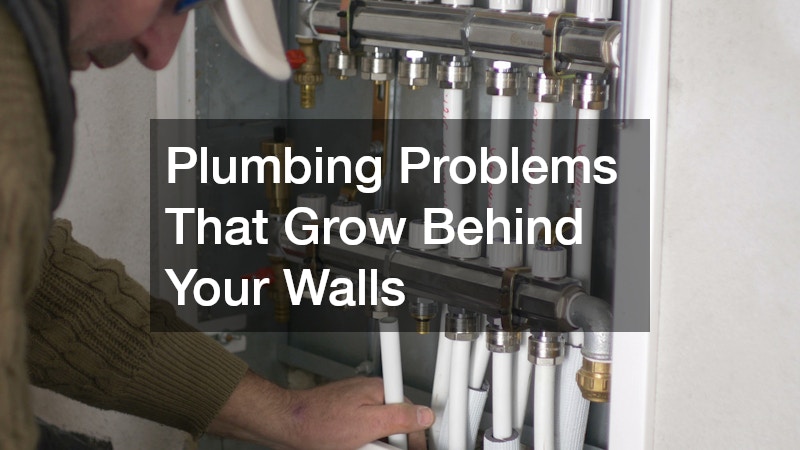
A leaking pipe hidden inside a wall or under a slab can waste thousands of gallons of water before anyone notices a problem. Beyond the wasted water bill, prolonged moisture exposure invites mold growth, weakens wood framing, and can even compromise drywall and flooring structurally over time.
Warning signs are often subtle at first: a slightly higher water bill, a musty smell in one room, or a small patch of discolored paint. These clues often trace back to leaking pipes hidden behind drywall or beneath flooring, quietly doing damage long before anything becomes visible. Catching these early often means a simple repair instead of a full section of wall or flooring replacement.
- Unexplained spikes in monthly water usage
- Warm spots on flooring, which can indicate a hot water line leak
- Peeling paint or bubbling drywall in isolated areas
- A faint but persistent musty odor in one part of the home
Cooling Systems That Fail Quietly Before They Fail Completely
Air conditioning units rarely stop working without warning. Long before a complete breakdown, most systems show subtle signs of strain, such as reduced airflow, inconsistent temperatures between rooms, or a slight rise in humidity indoors. Ignoring these symptoms often means paying for emergency air conditioning repair during the hottest week of the year, when demand and prices are both at their peak.
Routine seasonal maintenance from qualified HVAC companies can catch refrigerant leaks, worn belts, and clogged coils before they force a full system replacement. A properly maintained unit also uses less energy, which quietly saves money every single month it runs.
- Rooms that never feel as cool as the thermostat suggests
- Unusual clicking, rattling, or grinding sounds during operation
- A noticeable increase in humidity or stuffiness indoors
- Rising energy bills without a change in usage habits
Windows and Doors That Let More Than Light Inside

Older or poorly sealed windows and doors do more than let in drafts. They allow moisture, pests, and storm-driven water to slowly damage the framing around them, especially in regions prone to heavy wind and rain. Over time this hidden deterioration can weaken the structural opening and lead to costly repairs.
In storm-prone areas, upgrading to hurricane impact windows and doors installation is one of the most effective ways to prevent this slow, silent damage while also improving energy efficiency year-round. These systems are built to withstand extreme pressure changes and flying debris, which protects both the opening and everything behind it.
- Visible gaps or soft wood around window and door frames
- Condensation forming between glass panes, indicating seal failure
- Difficulty opening or closing doors and windows smoothly
- Drafts noticeable even when windows are fully closed
Trees and Landscaping Risks Hiding in Plain Sight
A tree that looks healthy from a distance can still pose a serious risk to your home if its roots have grown too close to your foundation, septic system, or underground pipes. Root intrusion happens gradually, often cracking pipes or lifting pavement years before anyone notices the cause.
Professional tree removal companies can assess root patterns, trunk stability, and canopy health to determine whether a tree is a long-term risk. Removing or relocating a problem tree early is almost always cheaper than repairing the foundation or plumbing damage it eventually causes.
- Cracked pavement or uneven walkways near large trees
- Slow drains or sewage backups linked to nearby root systems
- Leaning trunks or exposed roots close to the home
- Dead branches that could fall during storms
Foundation and Grading Issues That Start Underground
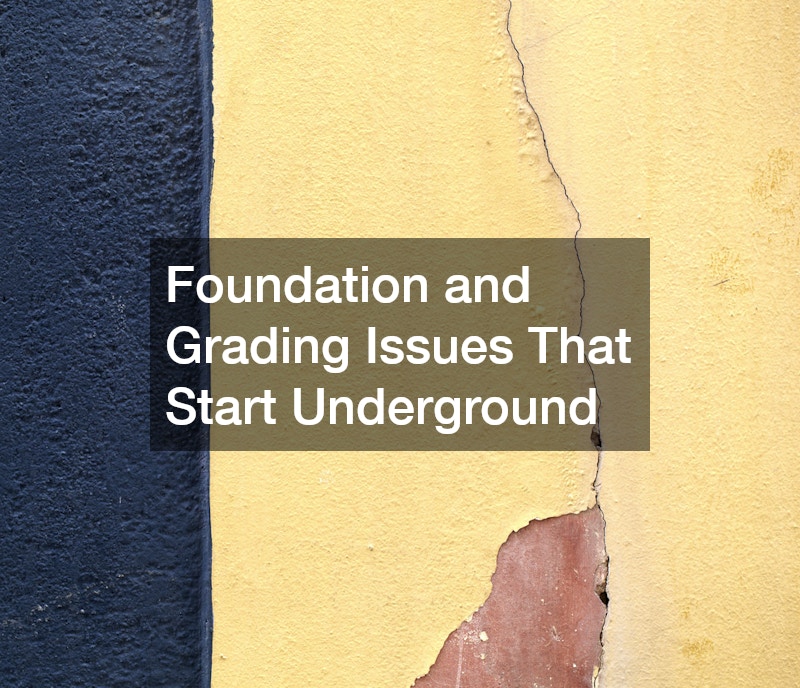
Poor drainage around a home is one of the most overlooked causes of expensive structural damage. When rainwater is not properly graded away from the foundation, it pools against the base of the house, gradually softening soil and creating pressure that can crack concrete over time. Building codes typically recommend a slope of at least 6 inches over the first 10 feet away from the house, but many older homes were never graded to this standard or have settled unevenly over the decades.
The damage rarely shows up overnight. Instead, homeowners notice small warning signs first — hairline cracks in the basement wall, a door that suddenly sticks, or a faint musty smell after heavy rain. By the time these symptoms appear, water may have already been undermining the foundation for years, and repairs can run anywhere from a few hundred dollars for simple regrading to $10,000 or more for foundation underpinning.
Clogged gutters and downspouts that dump water directly next to the foundation make the problem worse, as does landscaping that traps moisture against exterior walls. Even a well-built foundation can fail prematurely if water is allowed to collect in the same spot season after season.
Foundations rarely fail overnight. Small warning signs—hairline cracks in drywall, doors that stick in their frames, or a slight slope in the floor—often trace back to water pooling near the foundation or soil that shifts with every wet-dry cycle. By the time these symptoms are visible indoors, the ground beneath the house has usually been working against the structure for years.
Experienced excavating companies can regrade a property so water flows away from the foundation instead of toward it, install proper drainage channels like French drains or catch basins, or correct soil compaction issues that cause uneven settling. Many homeowners don’t realize that grading should slope away from the house at a minimum of 6 inches over the first 10 feet—a detail often overlooked by builders working on tight schedules or sloped lots.
Addressing grading problems early is far less invasive and disruptive than fixing a shifted foundation later. A regrading and drainage correction project might cost a few thousand dollars, while underpinning or piering a compromised foundation can easily run $20,000 to $50,000 or more, depending on the extent of the damage and the size of the home.
- Standing water near the foundation after rainfall, especially pooling that lingers more than 24 hours or sits within 5 feet of the house
- Cracks in the foundation wall wider than 1/4 inch, or hairline cracks that visibly grow season to season
- Doors and windows that stick or no longer latch properly, often signaling the frame has shifted out of square
- Uneven or sloping floors in older sections of the home, particularly a slope greater than 1 inch over 20 feet
- Gaps between exterior walls and the foundation, or soil that pulls away from the house during dry months
- Musty odors or visible moisture in crawl spaces, which often point to poor drainage before structural symptoms appear
Water Supply Problems That Develop Below the Surface
Homes relying on private water sources face a unique set of hidden risks, since problems with the well itself are rarely visible until water quality or pressure noticeably changes. Contamination, mineral buildup, or a failing pump can all develop underground long before symptoms appear at the tap.
Coliform bacteria, nitrates, and sediment or iron buildup can quietly accumulate for months after heavy rain or seasonal runoff, gradually clogging pipes and reducing flow. A pump nearing failure often gives little warning before it stops delivering water, and replacing one typically runs $1,500 to $5,000 depending on well depth.
Beneath the surface, private water wells can develop problems that go unnoticed for years, from casing corrosion to shifting water tables that reduce yield or introduce contaminants. Working with experienced deep water well drilling services for periodic testing and maintenance helps homeowners catch these issues early, protecting both water quality and the significant investment a private well represents. A thorough inspection typically checks water pressure, bacterial contamination, mineral content, and the condition of the well casing and pump system, any of which can signal trouble long before it becomes visible at the tap.
Experts generally recommend testing well water at least once a year for basic contaminants like coliform bacteria and nitrates, with additional testing if the water’s taste, smell, or color changes unexpectedly. Regular testing is especially important after heavy storms or nearby construction, which can shift underground water tables or introduce runoff contamination into the aquifer. Homeowners near agricultural land or industrial sites may need more frequent screening, since fertilizer runoff and chemical seepage can infiltrate groundwater without any obvious surface signs.
Ignoring these underlying issues can be costly: a failing pump, cracked casing, or contaminated aquifer often means thousands of dollars in emergency repairs or even the need for a full well replacement. By contrast, routine professional monitoring typically costs a few hundred dollars a year, a small price compared to the risk of drinking contaminated water or losing well function entirely.
- Sudden changes in water taste, smell, or color (metallic, sulfur/rotten-egg, or rusty tints often signal pipe corrosion or bacterial growth)
- Noticeable drops in water pressure throughout the home, especially if it worsens over weeks rather than happening all at once
- Sediment or grit appearing in tap water, which can indicate a failing water heater, corroding galvanized pipes, or a struggling well filtration system
- Unusual sounds coming from the well pump, such as rapid cycling, grinding, or humming without water flow
- Higher-than-normal water bills with no change in household usage, a common sign of an undetected underground leak
- Stains around fixtures, in sinks, or on laundry, which often point to mineral buildup or corroding supply lines before a full pipe failure occurs
Bathrooms Where Small Leaks Cause Big Problems

Bathrooms combine constant water exposure with tight, enclosed spaces, making them one of the most common places for hidden damage to develop. A worn wax ring under a toilet, cracked caulk at a tub surround, or a failing shower pan seal can leak steadily into the subfloor without any visible sign for months or even years.
By the time the flooring begins to soften, tiles crack, or a faint musty smell appears, the plywood subfloor and floor joists beneath may already be rotting. A wax ring typically lasts 20-30 years, but a slight toilet wobble or a bathroom remodel that disturbs the seal can shorten that dramatically. What starts as a $15 part and a 30-minute fix can turn into a $3,000-$7,000 subfloor and joist replacement if the leak goes unnoticed.
Bathrooms are especially vulnerable to hidden damage because water, humidity, and daily use combine in a small, enclosed space. A slow leak around a shower pan or toilet base can quietly saturate subflooring for months before soft spots, cracked tile, or a musty smell finally give it away. By the time those signs appear, the plywood underneath may already be rotted and the framing beneath the tub or shower wall compromised.
When damage has already progressed, working with experienced bathroom remodeling services ensures that rotted subflooring, mold, and damaged framing are fully addressed rather than simply covered over with new tile. A qualified contractor will pull up flooring and open walls as needed to check for moisture readings above 15-20%, replace any water-damaged studs or joists, and treat mold at its source instead of painting over stains.
A proper remodel also gives homeowners a chance to upgrade ventilation and waterproofing, reducing the risk of the same hidden damage happening again. This might mean installing a higher-capacity exhaust fan, adding a vapor barrier or waterproof membrane behind tile, or regrading a shower floor so water drains properly instead of pooling near seams. These upgrades typically add a modest amount to the overall remodel cost but are far cheaper than repeating structural repairs a few years down the line.
- Soft or bouncy flooring near the toilet or shower, often signaling subfloor rot from years of slow leaks around wax rings or shower pans
- Discoloration on the ceiling of the room below a bathroom, especially rings or brownish stains that expand after each shower
- Persistent mildew smell despite regular cleaning, which usually means moisture is trapped inside walls or under flooring, not just on visible surfaces
- Grout or caulk that separates repeatedly after repair, a sign that water is already seeping behind tile rather than a one-time application error
- Warped or swelling baseboards along the bathroom’s exterior wall, indicating moisture wicking through the drywall
- Cabinet doors under the sink that stick or swell, often from slow drain leaks that go unnoticed for months
- A water heater or utility closet nearby with rust stains or a faint musty odor, pointing to hidden condensation or pipe seepage feeding the problem
Building a Simple Home Inspection Habit
Most hidden damage becomes expensive because it goes unnoticed for so long, not because it was impossible to catch. Setting a recurring seasonal reminder to check attics, crawl spaces, and exterior grading takes very little time but dramatically increases the odds of catching a problem while it is still small.
- Walk the exterior perimeter after heavy storms to check grading and drainage
- Check attic insulation and rafters twice a year for moisture stains
- Test water pressure and listen for unusual plumbing sounds monthly
- Keep a simple log of repairs and inspections for future reference
Conclusion
Hidden home damage rarely announces itself until the repair bill is already substantial, but a little proactive attention can prevent most of these costly surprises. Walking through your home with a critical eye every season, and bringing in qualified professionals when something seems off is far cheaper than waiting for a visible failure. Start with the areas most prone to silent damage, like your roof, plumbing, and foundation, and build outward from there. The sooner a small issue is found, the smaller the bill to fix it.